Are We Still Reading Magazines? What Print Design Looks Like in 2026
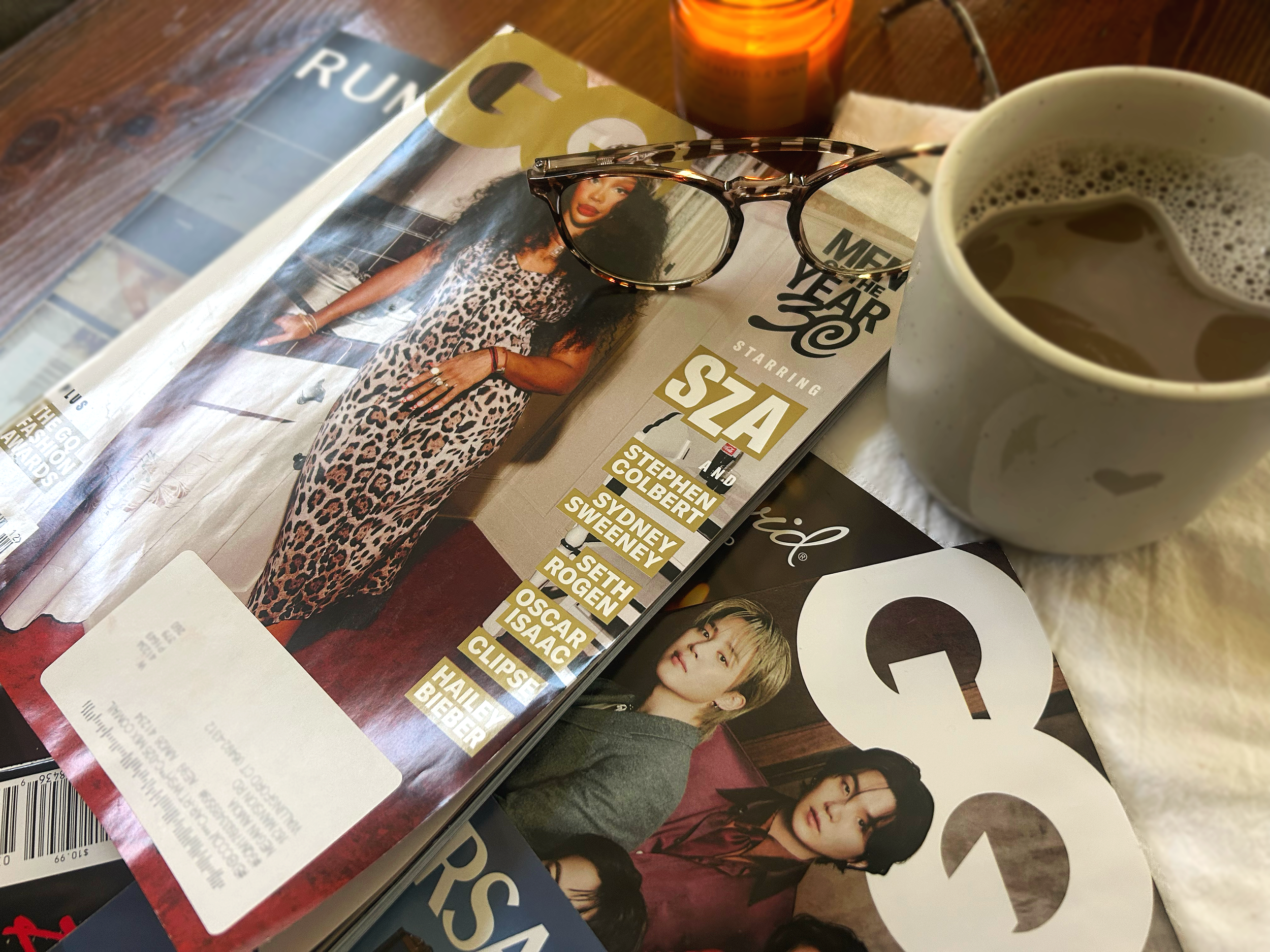
My mother is a collector of magazines. Growing up, I never questioned whether magazines still mattered, because in my house, they did. She was the kind of person who couldn’t walk through a grocery store or CVS without picking up at least one new issue. Our home has piles of old magazines with everything from cooking and recipes, to crafting guides, home inspiration, the newest celebrity gossip, and even random historical topics like the history of Santa Clause.
She is a lover of learning, and reading, but mostly from short-form quick information that came from magazines. So throughout my life, it was clear to me that these publications would never become outdated. They were still worth holding onto.
Because of my mom, I’ve always believed that magazines still have a place in today's world, even as everything else moves online.
Even in a noticeable shift from print to online publication, magazines aren’t disappearing. Instead they're changing and adapting to a new society. In 2026, print design is evolving in ways that make the experience feel more intentional and personal.
The Quiet Comeback of Magazines
In a world that has been taken over by digital content, magazines still reach a wide audience. In fact, around 223 million adults in the United States have read a magazine in the past six months, which is roughly 86% of the population (SmartNews, 2025).
To be completely transparent, that statistic actually surprised me a lot. We often assume print media is fading away, but the reality is quite the opposite. Magazines are carving their own path in the information industry. Instead of trying to compete with digital scrolling, they focus on depth, design, and experience rather than speed.
One huge reason why magazines still resonate with a large majority of the population is that they offer something that screens can’t: a tactile experience. Holding a magazine, flipping through pages, noticing the intricate layouts, the exponential photography, that creates a new level of engagement and attention. You become immersed in the content, rather than just scanning an article online (Yong, 2025).
As a designer I might be more biased because I notice these small details that make a magazine so special. But studies show that readers are drawn to the physical experience that a magazine provides. Print design has the ability to slow people down, and encourage them to really look at the content.
Quality Over Quantity
One of the most noticeable shifts happening in the magazine industry is the movement towards fewer, higher quality issues. For example, major fashion magazines like Vogue are reducing the number of print issues they release each year, and are instead focusing on creating larger, more premium editions.
This shift creates an illusion of luxury and exclusiveness to their issues. When publications become more rare, they become more desired.
These new issues are printed on thicker paper, packed with denser content, and designed to feel like something you want to keep. Almost like a collectable book. Editors have described print magazines as becoming less about delivering news, and more about creating something meaningful (Milnes, 2025).
Print design has become a deeper, more intricate process for designers now. Instead of cranking out magazine layouts for this week's newest issue that's going to be picked up and dumped, designers are rethinking how to create pages that feel timeless and visually rich. The magazine itself becomes a piece of art, suddenly making typography, photography, and spacing even more important.
A Break From Digital Overload
Another reason magazines are gaining more traction amongst this new society is because we are all feeling similar effects from digital fatigue.
Between social media, notifications, and constant updates, it’s easy to become overwhelmed by your screens. In the same way as reading a book, reading a magazine offers a small escape from the digital noise. Print encourages focus, and allows readers to engage with stories without the distractions of pop-ups or endless scrolling (Typed Out Loud).
Magazines are becoming a part of a more mindful approach to media consumption. Some industry reports even describe 2026 as a year of “intentional media,” where readers are beginning to seek out content they actually want to spend their time reading, rather than skimming whatever appears in their feeds (PressReader, 2026).
When people choose to read something intentionally, design matters even more. A well designed magazine doesn’t simply just deliver information, it gives the reader a physical, visual experience.
A Rise of Niche
This has also contributed to the rise of independent and niche publications. Mainstream magazines have begun publishing fewer, larger issues, but smaller magazines that focus on specific topics such as design, culture, food, or local communities are thriving. These prints often embrace bold editorial perspectives and experimental layouts that larger publishers might avoid.
Independent magazines have a compelling sense of identity that gets lost amongst larger publishers. They don’t try to appeal to everyone, instead they target smaller audiences who genuinely care about what they have to say.
For designers, this opens the door to more creative storytelling through layout, illustration, and photography (ICN, 2026).
So… Are We Still Reading Magazines?
Yes. But not in the same way.
Magazines have become cultural artifacts rather than disposable media. Issues that are thoughtfully designed and produced become collectable items that people keep in their homes on display. The shift from quick, mass produced information to slow, visual, and meaningful experience has made print media more important than ever.
Magazines have quit trying to compete with the speed of digital media. Instead, they are becoming pieces of art.
Flipping through a beautifully designed magazine in 2026 can feel refreshing. Layouts become more experimental, images are allowed to take up entire spreads, and typography becomes a central visual element. It’s a reminder that sometimes the best content isn’t the fastest or the newest. It’s the content that invites us to pause, and allows us to enjoy the experience.
And honestly, that's something print design has always done best.

Hi, I’m Erin!
I’m a graphic designer and creative who loves bringing ideas to life.
When I’m not designing, I’m usually exploring new hobbies, trying something hands-on, or getting inspired by everyday things.
This little corner of the internet is where I share what I’m working on and what I’m learning along the way.
Come Say Hi!
