Plateful Dashboard


ROLE
Graphic Designer
DURATION
Fall 2025
PROJECT SCOPE
Designing a digital dashboard that helps users track nutrition, monitor wellness habits, and discover meal inspiration in one centralized platform.
TOOLS
Figma
OVERVIEW
Plateful is a digital dashboard designed to simplify the way people track and understand their eating habits. The platform combines meal tracking, nutritional insights, mood logging, hydration tracking, and goal setting into a single, user-friendly interface.
The project was driven by the idea that maintaining a healthy lifestyle can feel overwhelming—especially when users are forced to juggle multiple apps or make constant decisions about what to eat. Plateful addresses this by creating a centralized system that not only tracks daily habits but also provides guidance and inspiration through recipes, educational content, and structured planning tools.
OBJECTIVES
The goal of this project was to design an intuitive and engaging dashboard that supports users in building healthier habits without adding complexity to their daily routines.
Key objectives included:
Create a centralized hub for tracking meals, macros/micros, mood, and hydration
Reduce decision fatigue through curated recipes and meal inspiration
Provide educational resources around nutrition and diet plans
Encourage consistency through goal setting and journaling
Design a system that is both informative and easy to navigate
DELIVERABLES
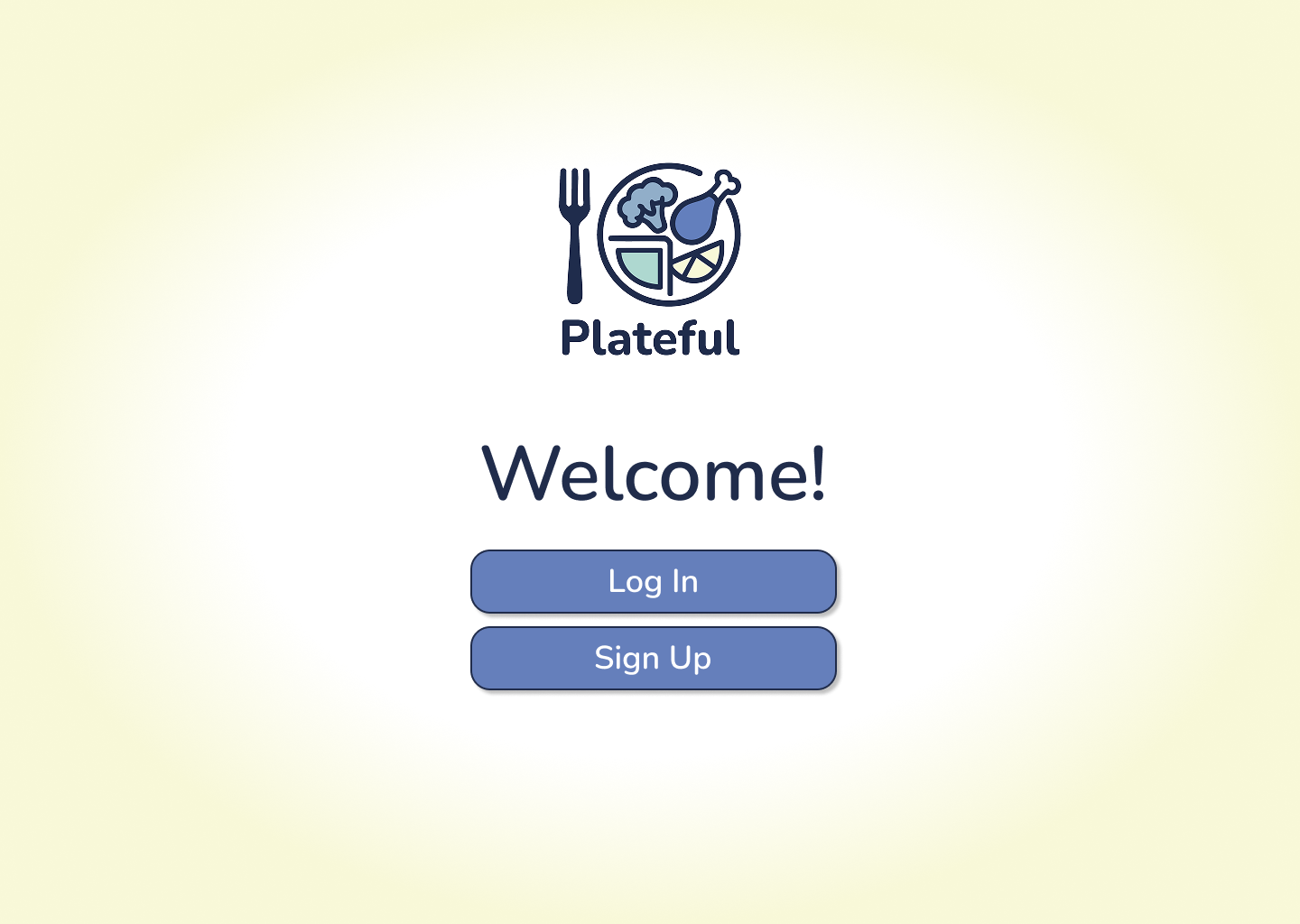
Welcome/login screen
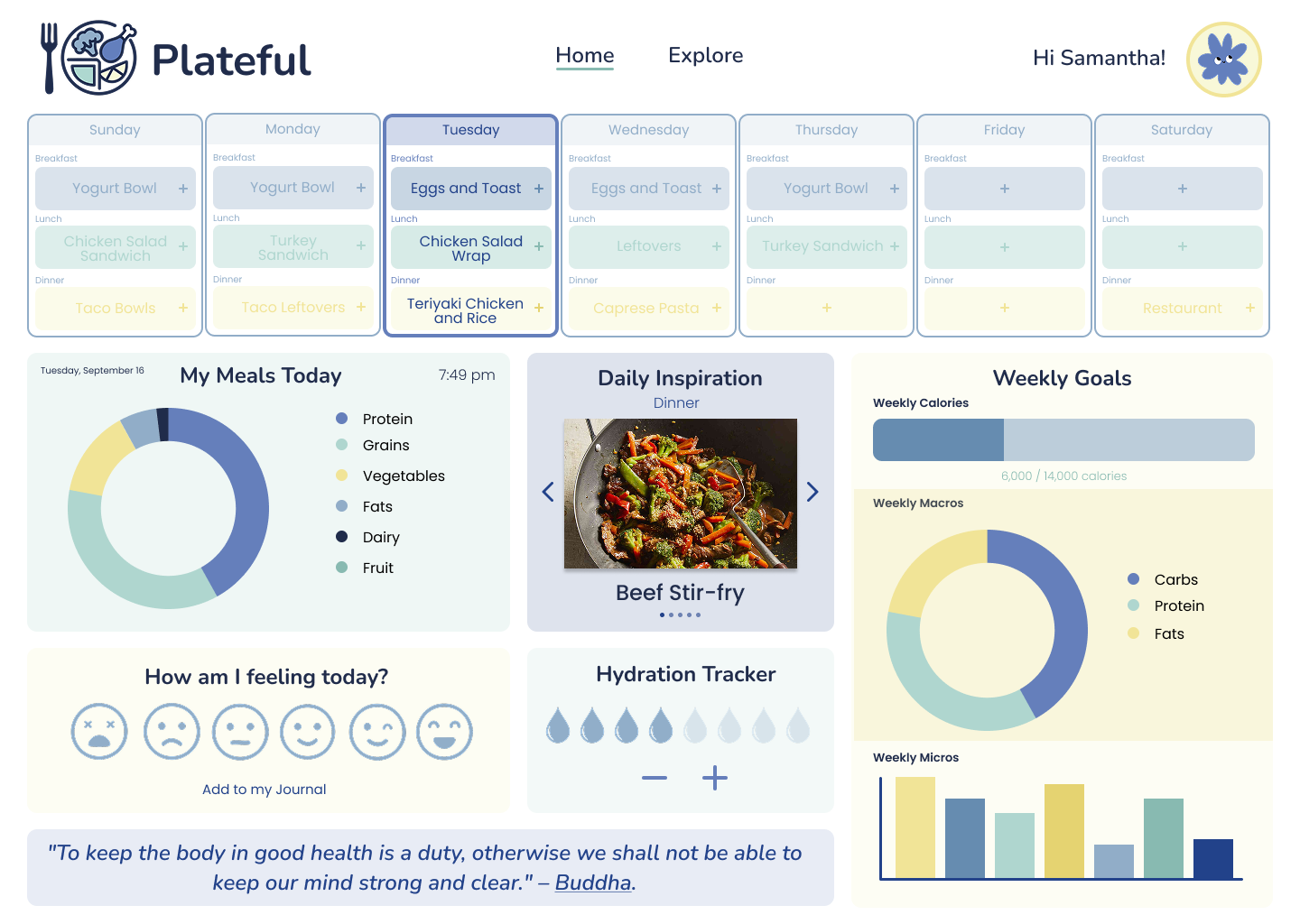
Home dashboard with daily tracking features
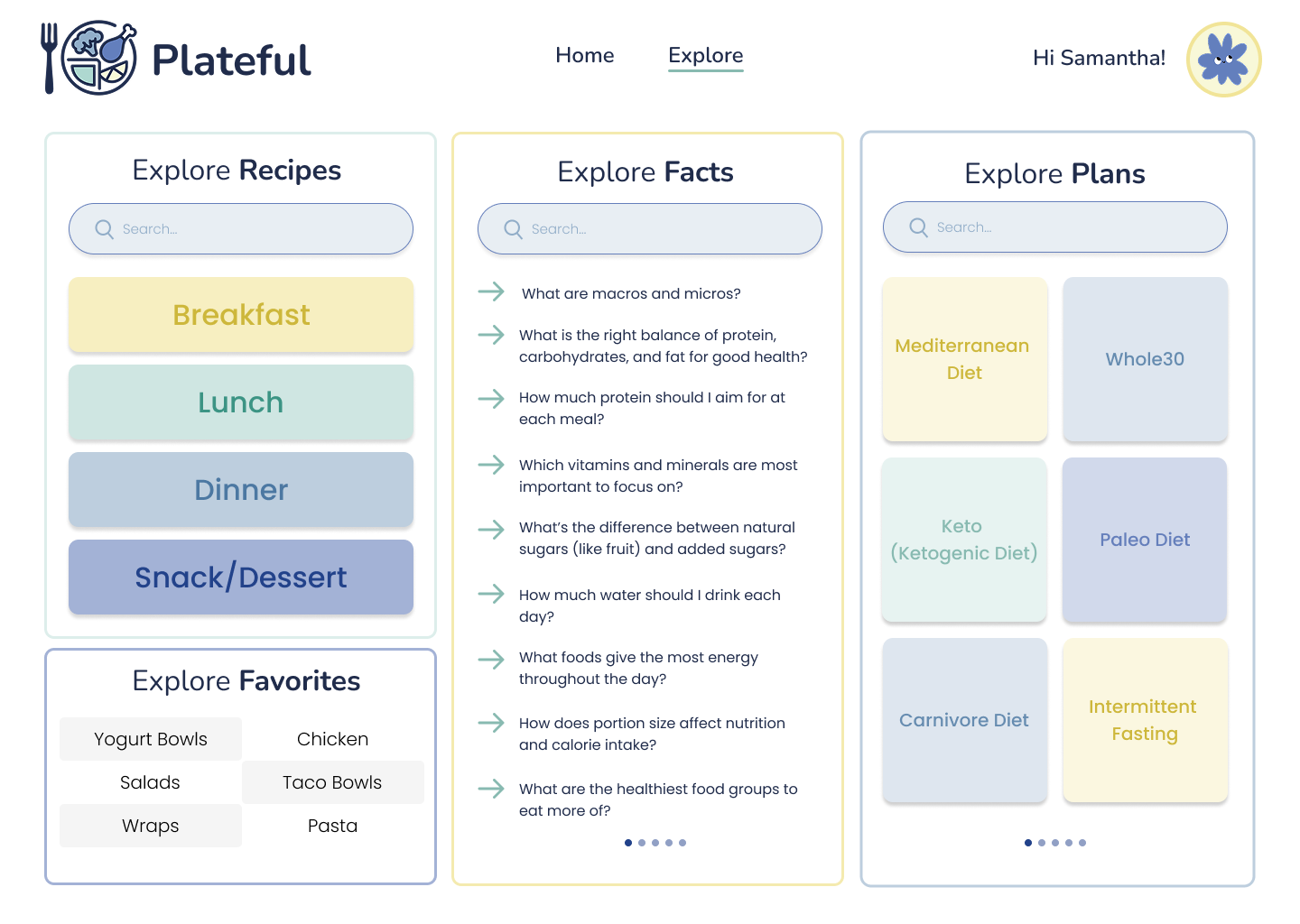
Explore page for recipes, facts, and diet plans
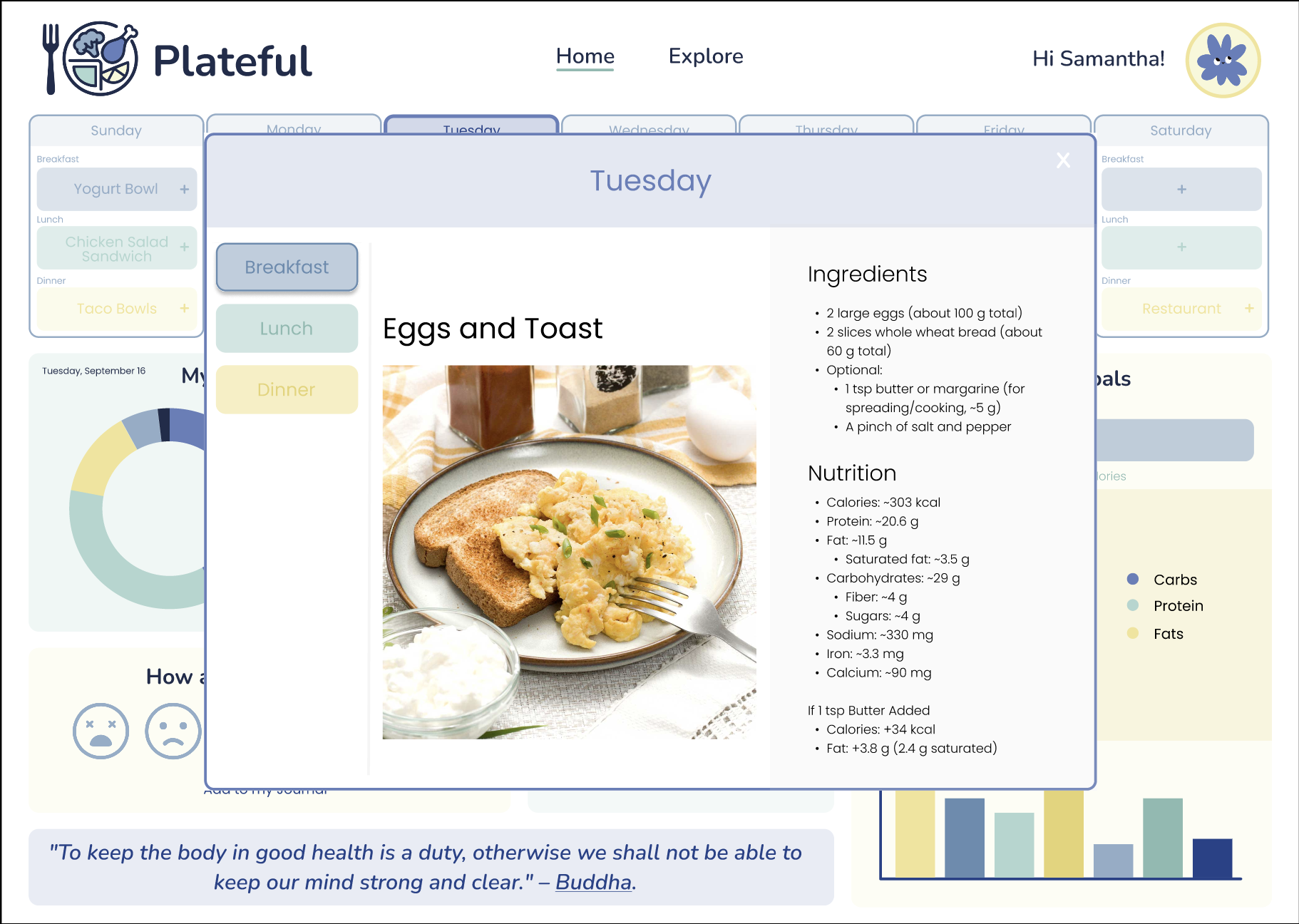
Recipe detail views (breakfast, lunch, dinner)
Nutrition information layout (micros & macros)
Journal interface for daily reflection
Goal tracking and progress visualization components
OUTCOME
Plateful results in a cohesive, all-in-one wellness experience that balances data tracking with usability and inspiration. The dashboard simplifies complex nutritional information into digestible visuals while maintaining a clean and approachable interface.
By combining tracking, education, and discovery, the platform encourages users to stay consistent with their habits while reducing the stress of planning meals. The design creates a more engaging and supportive experience for users looking to better understand and improve their relationship with food.
-

DEFINE
Identify challenges users face when tracking nutrition, including overwhelm, inconsistency, and lack of accessible information.
-

IDEATE
Explore ways to combine tracking, education, and inspiration into a single streamlined experience.
-

PROTOTYPE
Design a multi-page dashboard system in Figma, including home, explore, and journal interfaces.
-

TEST
Iterate on layout, hierarchy, and usability to ensure clarity and ease of navigation across all features.
Research
USER PERSONA & VISUAL INSPIRATION
To inform the design of Plateful, I combined user-centered thinking with visual exploration. I developed a primary user persona, “Samantha the Balanced Student,” representing a busy college student who wants to maintain healthy habits without the pressure of strict tracking. From this, I identified key needs: a simple way to log meals and nutrition, clear macro and micronutrient insights, tools to connect food with mood and energy, and easy access to meal inspiration to reduce decision fatigue.
Alongside this, I explored visual and UX inspiration through Pinterest, focusing on wellness and dashboard interfaces. This research highlighted the importance of soft, approachable color palettes, clean card-based layouts, clear data visualization, and strong hierarchy for readability. Together, these insights shaped Plateful into a system that balances functionality with a supportive, non-intimidating user experience.
Planning & Execution
CONCEPT DEVELOPMENT
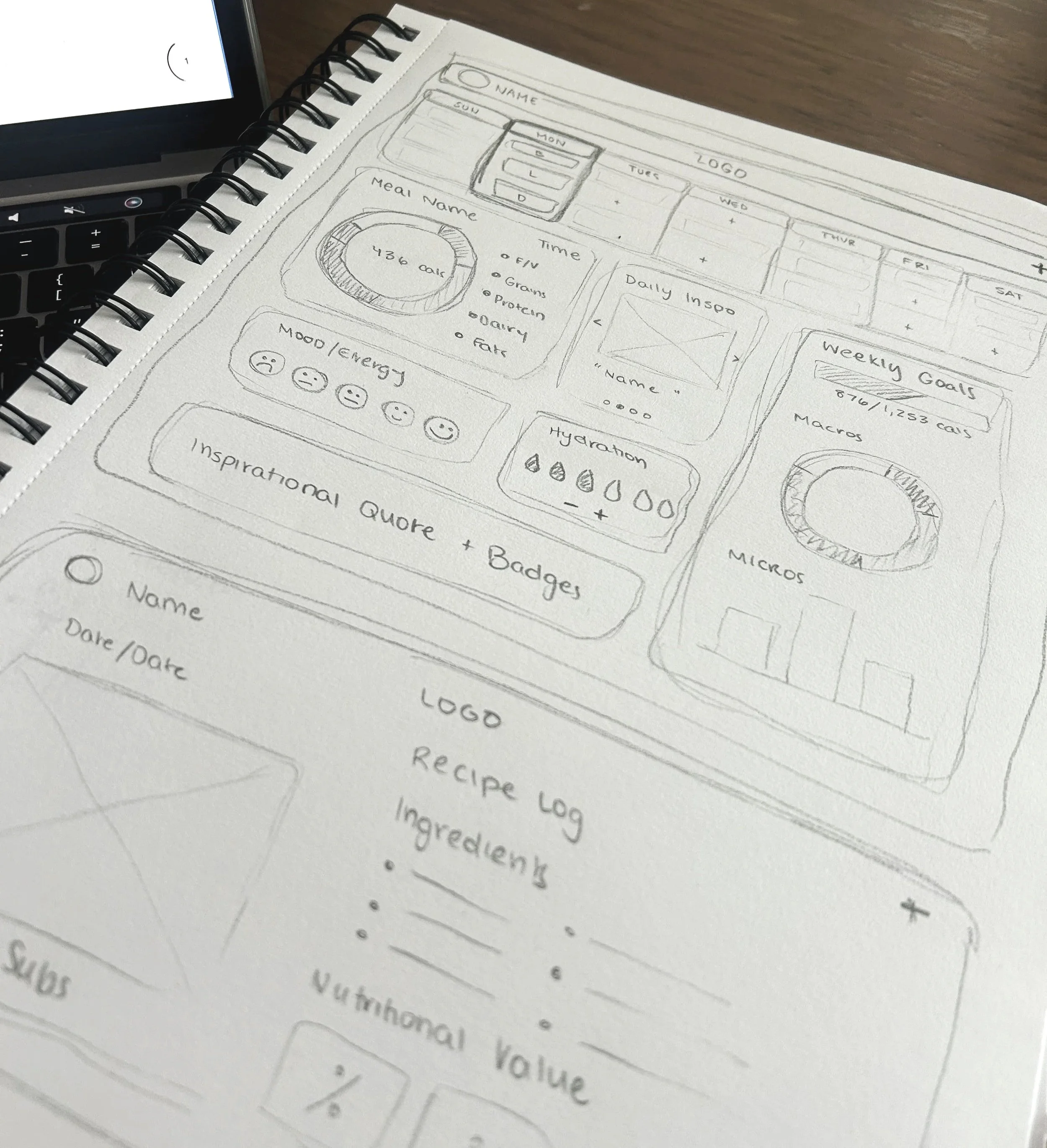
The project began with identifying a common problem: people often struggle to maintain healthy eating habits due to lack of structure, information overload, or decision fatigue.
I mapped out key features that would directly address these challenges:
Daily tracking (meals, water, mood)
Nutritional breakdown (micros and macros)
Goal setting and progress tracking
Recipe discovery and meal inspiration
Reflection through journaling
From there, I structured the dashboard into two primary sections: Home and Explore, ensuring a clear separation between tracking and discovery.
DESIGNING THE DASHBOARD
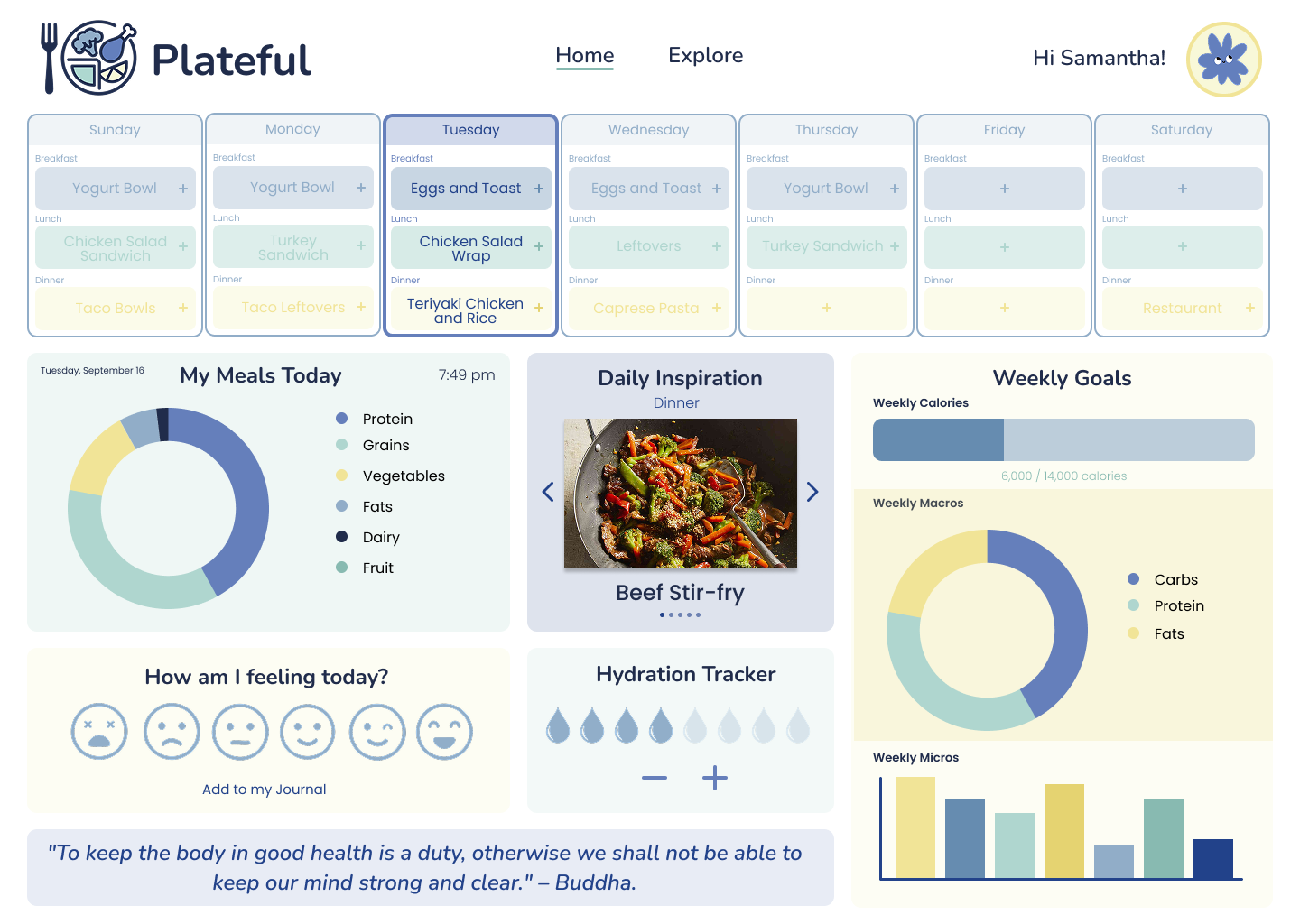
The Home page acts as the central hub for daily activity.
Visualizes meals consumed throughout the day
Displays macro and micronutrient breakdowns
Includes hydration tracking and mood logging
Highlights daily inspiration (featured meals/recipes)
Tracks progress toward weekly goals
The layout was designed to prioritize clarity and scannability, allowing users to quickly understand their daily habits at a glance.

THE EXPLORE PAGE
The Explore section was created to reduce decision fatigue and support user learning.
Browse recipes by category (breakfast, lunch, dinner, snacks)
Save and revisit favorite meals
Read nutritional facts and educational content
Explore different diet plans and approaches
This section balances functionality with inspiration, giving users tools to make informed choices without feeling overwhelmed.
RECIPE & NUTRITION EXPERIENCE
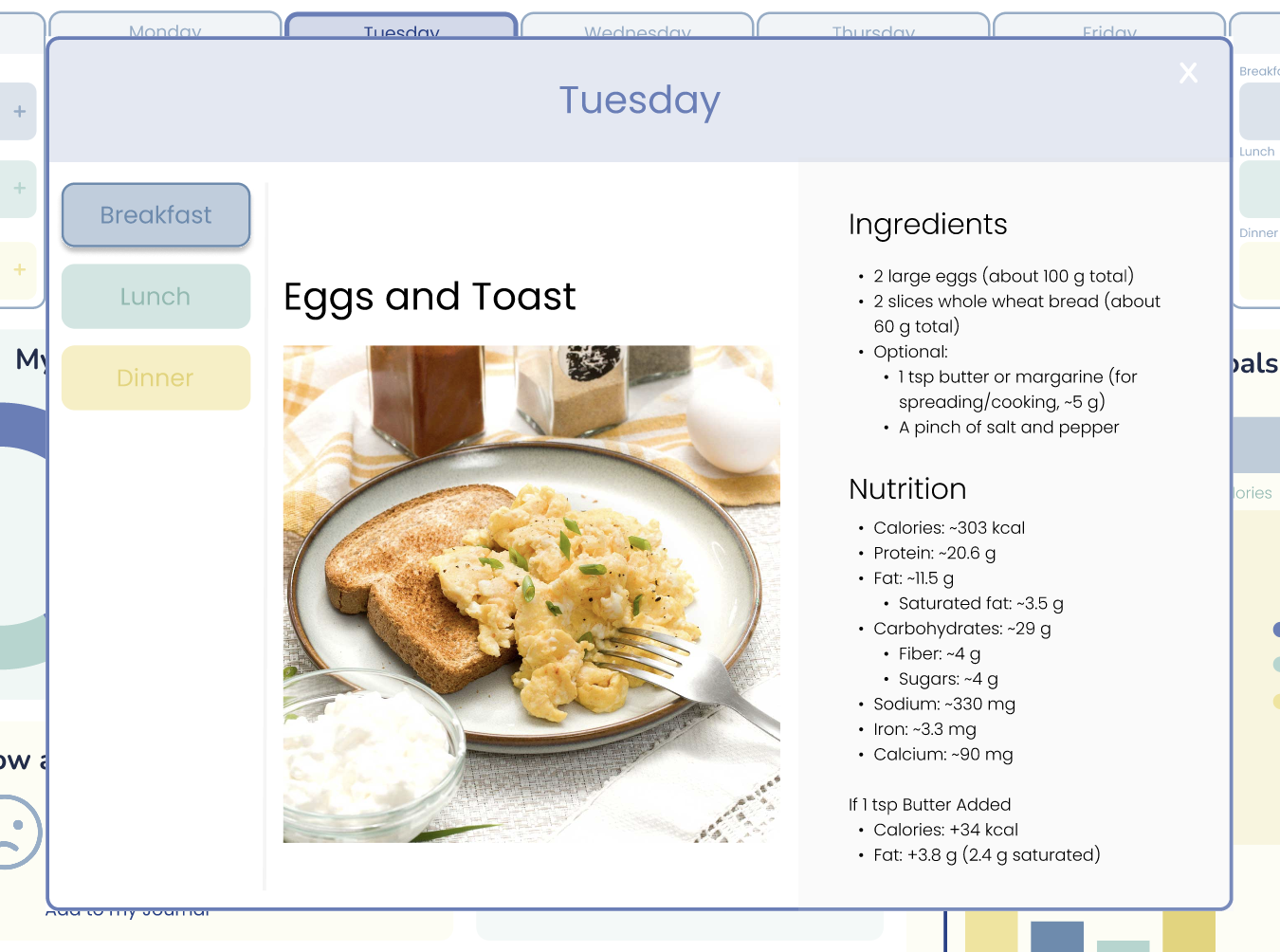
Each recipe view provides both guidance and transparency.
Clear ingredient lists and preparation details
Visual presentation of meals
Detailed nutritional breakdowns, including macros and key micronutrients
This ensures users not only know what to eat, but also understand why it supports their goals.
JOURNAL & REFLECTION
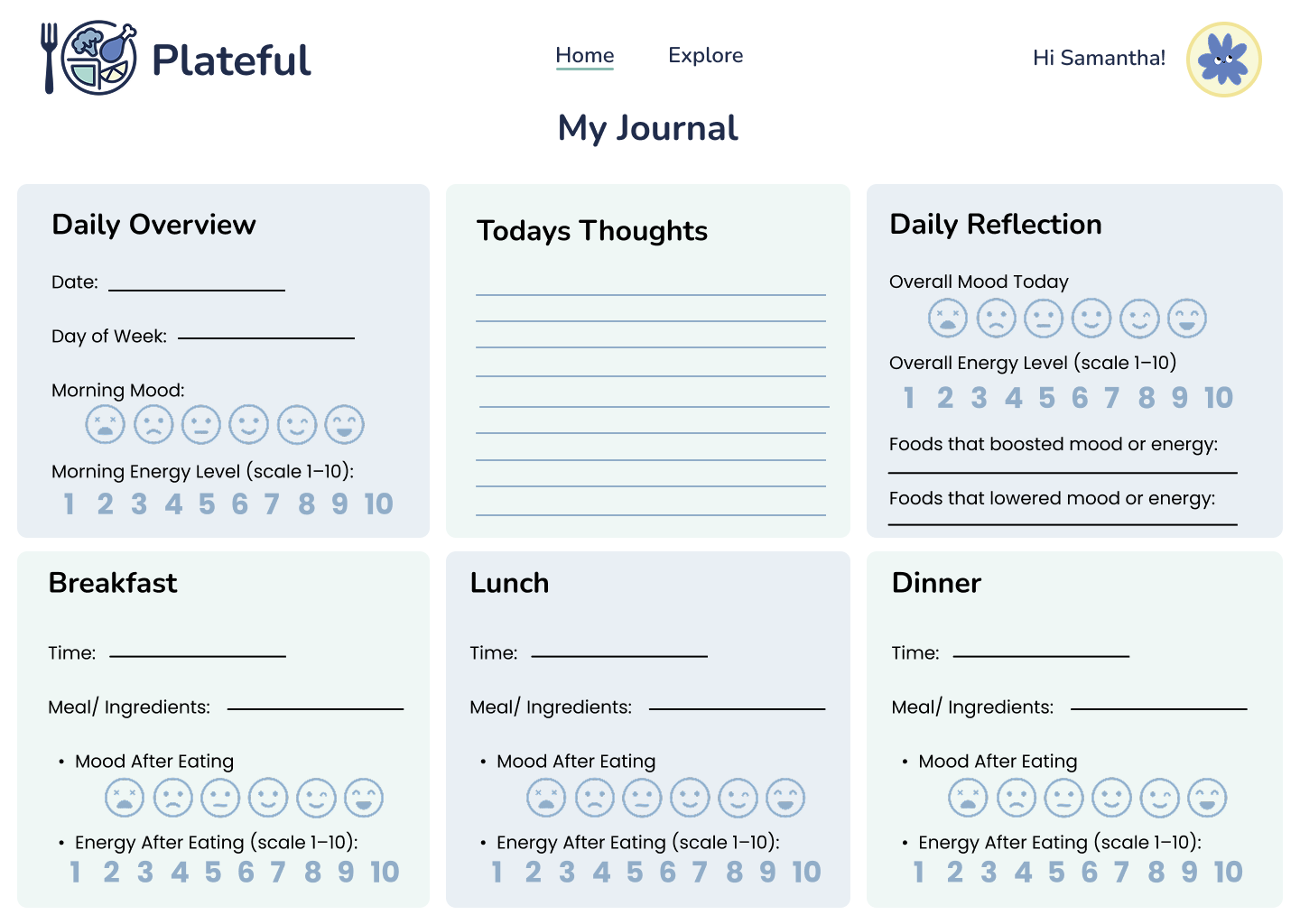
To support habit-building beyond tracking, I included a journaling component.
Daily reflections on meals and mood
Energy level tracking throughout the day
Space for personal notes and insights
This feature encourages mindfulness and helps users identify patterns in their behavior over time.
Reflection
This project challenged me to design a system that balances data, usability, and user motivation within a single experience. I had to think carefully about how to present complex information—like nutritional data—in a way that feels approachable rather than overwhelming. Through this process, I strengthened my ability to design for behavior change, focusing not just on functionality but on how users feel when interacting with a product. Plateful reinforced the importance of clarity, hierarchy, and thoughtful feature integration when designing tools that people rely on daily.